
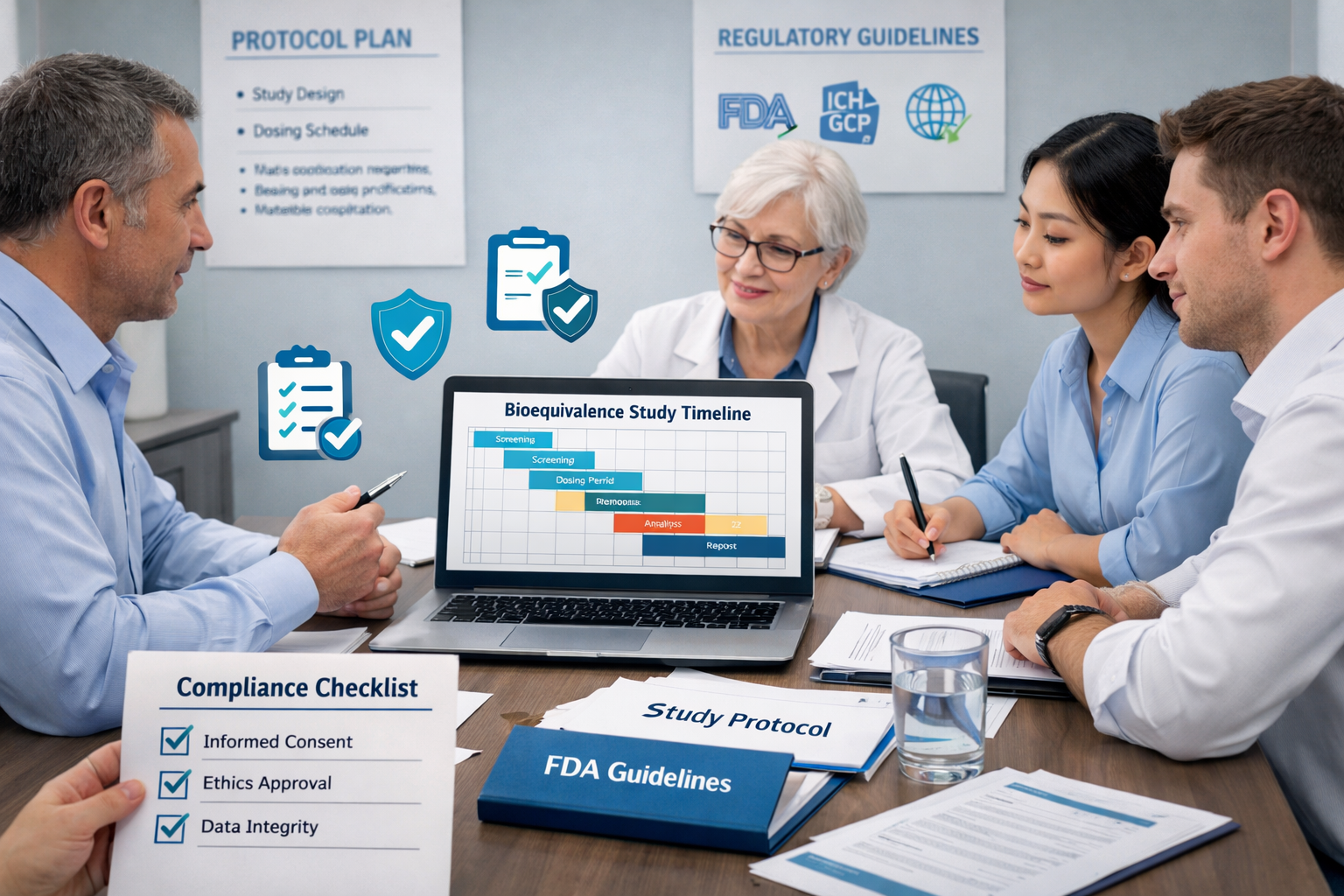
Bioequivalence (BE) studies rely on a close connection between regulatory policy and the operational decisions made by CROs long before the first volunteer arrives on site. The success of a BE program depends on how well a CRO can interpret evolving guidance and translate it into protocol design, analytical preparation, statistical planning, recruitment strategies, and quality oversight. For sponsors, this alignment affects timelines, inspection readiness, and approval outcomes.
Why Regulatory Interpretation Is Essential for BE Success
BE studies sit at the intersection of scientific rigor and regulatory precision. Agencies expect clear justification for study design, validated analytical methods, and transparent documentation across every operational step. Even small misalignments can trigger protocol changes or cause regulators to request additional justification.
Regulators continue to refine their expectations around method validation, demographic representation, electronic data systems, and trial design approaches for both immediate and modified-release formulations. These updates may seem minor, but each one shapes practical choices inside a BE study. Subject eligibility criteria, sampling windows, washout intervals, metabolite monitoring, and dropout-rate assumptions all require alignment with policy. Keeping these elements current reduces the likelihood of amendments or delays.
A CRO with strong regulatory insight can anticipate these requirements during protocol development rather than correcting them mid-study. Because these shifts affect foundational study elements, policy interpretation must begin at the protocol stage.
Policy-Driven Planning Starts at Protocol Development
Policy awareness also drives decisions across cross-functional operations. Clinical operations, bioanalytical teams, medical staff, statisticians, and regulatory specialists must work together early on to interpret guidance and build it into the study plan. This collaboration ensures consistency and reduces downstream risk.
Analytical method readiness is strongly tied to updated validation expectations, requiring teams to plan stability assessments, matrix selection, partial validations, and contingencies for metabolite analysis at the outset. Volunteer recruitment strategies must also reflect demographic guidance, metabolic considerations, and safety monitoring expectations for specific APIs, shaping how screening numbers, BMI thresholds, and inclusion criteria are defined.
Analytical Method Planning Includes:
- Early stability evaluations informed by recent guidance
- Matrix selection based on regulatory expectations
- Partial validations planned ahead of formulation changes
- Metabolite analysis incorporated when policy suggests it
Statistical Considerations Include:
- Sample-size strategies for highly variable drugs
- Correct use of scaled versus average bioequivalence
- Updated equivalence margins and sequence randomization
- Re-test planning when supported by policy
Policies also influence operational workflows related to electronic systems and real-time data oversight. Regulatory focus on traceability means eSource platforms must be validated, audit trails must be preserved, and deviations must be documented with clear, guidance-consistent language. These expectations directly affect inspection readiness, data integrity, and the credibility of the final study package.
How Sponsors Benefit from CROs That Track Policy Closely
Sponsors partnering with a policy-aligned CRO see measurable benefits:
- Fewer protocol amendments
- Reduced timeline risk
- Improved inspection readiness
- Higher likelihood of first-cycle approval
- Better management of complex BE designs
These gains not only support regulatory approval but also strengthen commercial competitiveness in a crowded generic-drug market.
Final Thoughts
When policy translation happens early and consistently, regulators see a study supported by strong scientific justification, clean data, and clear adherence to guidance. Sponsors benefit from greater predictability, fewer amendments, shorter review cycles, and a more reliable pathway to approval. In a highly competitive generic-drug market, these advantages determine which products reach patients first. CROs that embed policy into every stage of planning ensure that BE studies operate with greater precision, predictability, and regulatory confidence.